


Waterjet vs Laser Cutting: Which Technique Delivers Better Results for Modern Metal Fabrication?


In today’s fast-moving manufacturing world, precision is no longer a luxury — it’s a requirement. Whether you’re shaping steel for construction, designing custom automotive parts, or creating intricate components for industrial projects, choosing the right cutting technology can completely transform the final outcome.
Among the most trusted technologies in modern metal fabrication, high-pressure water cutting steel and water jet metal cutting techniques stand out, along with advanced laser cutting systems commonly used in metal cutting shops across regions like Melbourne, Brisbane, and Perth. But which technique is truly better for your project? Let’s break it down in the simplest, most practical way.
Understanding Waterjet Cutting, Precision Without Heat
Waterjet cutting works by pushing water mixed with abrasive particles through a small nozzle at extremely high pressure. This force is powerful enough to slice through metal, stone, and even composite materials with remarkable accuracy.
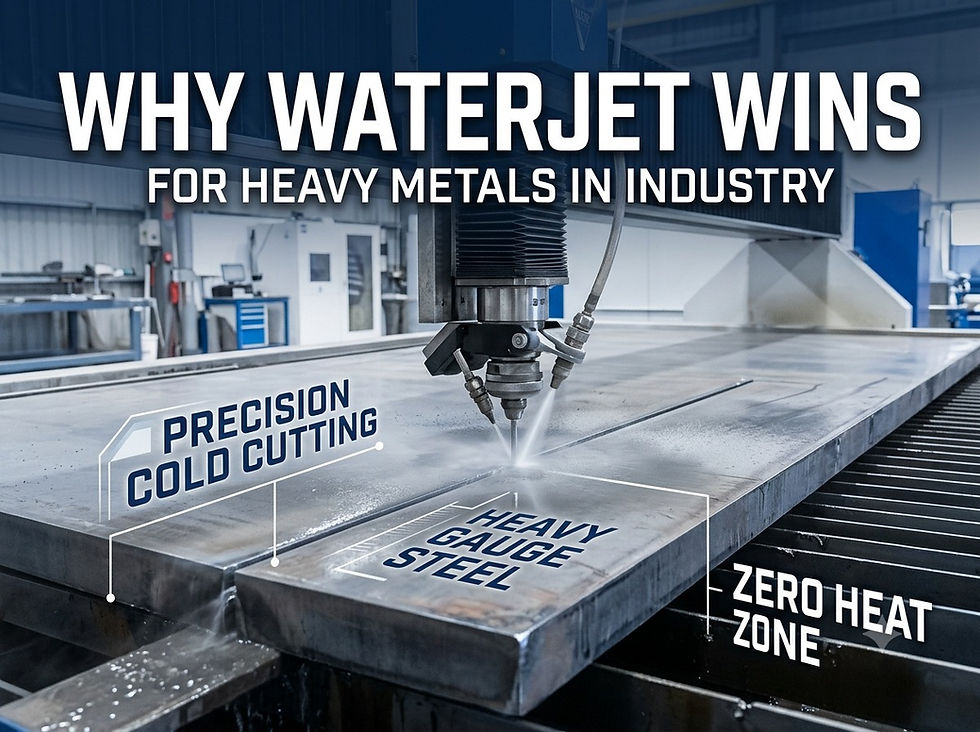
Why Industries Prefer High Pressure Water Cutting for Steel
Here are the advantages that make High-Pressure Water Cutting Steel
favourite across major industries:
No Heat-Affected Zones (HAZ)
Because it’s a cold-cutting technique, metal isn’t exposed to heat. This preserves the structural integrity, especially important for stainless steel and hardened alloys.
Clean & Smooth Edges
Water jet metal cutting leaves minimal burrs, reducing finishing time.
Cuts Almost Anything
From aluminium to granite, rubber to titanium — nothing is off-limits.
Environmentally Friendly
No toxic fumes, no melting, and very little waste.
A fabrication manager from a metal workshop in Brisbane once shared:
“We switched to waterjet cutting for our precision parts because we needed zero distortion. It was the best decision for our heavy-duty components.”
Understanding Laser Cutting, Speed, and Accuracy for Thin Metals
Laser cutting uses a concentrated beam of light that melts, burns, or vaporizes metal with extreme accuracy. Metal cutting shops rely heavily on laser systems for projects that require tight tolerances and high-speed production.
What Makes Laser Cutting Popular?
Fast Cutting Speeds
Ideal for thin to medium-thickness metal sheets.
High Accuracy for Intricate Patterns
Excellent for detailed designs, logos, signage, and decorative work.
Minimal Material Waste
Narrow kerf width preserves material and reduces scrap.
Automated and Efficient
Perfect for mass production tasks.
However, laser cutting generates heat, which may cause slight warping or heat-affected zones, especially with thicker metals.
Waterjet vs Laser Cutting — Side-by-Side Comparison
Feature | Waterjet Cutting | Laser Cutting |
Heat Usage | Cold cutting (no heat) | Generates high heat |
Materials Supported | Most materials (metal, stone, glass, rubber) | Mostly metals & thin materials |
Thickness Capacity | Cuts extremely thick materials | best for thin to medium |
Edge Quality | Smooth, no heat distortion | Clean but may have HAZ |
Cutting Speed | Slower | Much faster |
Cost Efficiency | Higher for thick materials | Higher for thin sheets |
Precision | Very high | Extremely high |
Which Technique Should You Choose for Modern Fabrication?
Both technologies deliver impressive results, but the choice depends entirely on your needs:
Choose Waterjet Cutting If:
Your material is thick or heat-sensitive
You need ultra-smooth edges
The design demands flexibility
Distortion-free results are essential
Choose Laser Cutting If:
You’re working with thin metal sheets
You need fast turnaround
The design is highly detailed
You want excellent precision at high speed
Most advanced metal cutting shops today use both technologies, depending on the project type, giving clients the best of both worlds.
Real-Life Application Examples
Waterjet Cutting Use Cases
Aircraft engine components
Custom automotive parts
Heavy machinery plates
Architectural stone and metal panels
Laser Cutting Use Cases
Decorative metal screens
Industrial signage
Sheet metal enclosures
Electrical panels
A fabrication company in Perth recently achieved nearly 25% reduction in material waste after switching to laser technology for mass production — demonstrating how dramatically the right cutting method can impact cost and efficiency.
Final Thoughts: The Right Technology Elevates the Final Product
Whether you're a manufacturer, architect, designer, or contractor, choosing the right cutting technique is central to achieving durability, precision, and long-term performance.
Both water jet metal cutting and laser cutting offer powerful benefits, and understanding their differences helps you select the most efficient — and cost-effective — solution.
If you’re working on a new fabrication project, start by understanding your material, thickness, and design complexity. The right cutting method can enhance quality, speed, and overall project success.
Choose wisely - and let technology elevate your craft.


Comments